Categories
Blog

WordPress vs Webflow vs Custom Code: Which Is Right for You?

Blog

Choosing the Right Platform for Industrial Websites in 2025

For steel manufacturers and industrial businesses, your website isn’t just a digital brochure — it’s your first impression, sales engine, and credibility marker.

Whether you’re targeting B2B buyers, government tenders, or international clients, your website’s speed, flexibility, and SEO performance directly impact your business growth.

But here’s the real challenge: with so many options — WordPress, Webflow, and Custom Coded sites — how do you decide what’s best for your brand and budget?

Let’s break down each option with pros, cons, and cost estimates, so you can make an informed decision that fits your manufacturing goals and long-term growth.

1. WordPress – The Industry Workhorse

WordPress powers over 40% of websites globally, and for good reason: it’s versatile, affordable, and SEO-friendly — perfect for B2B and manufacturing websites that need regular updates or multiple service pages.

Pros of WordPress

  • Flexible & Scalable: Ideal for multi-service manufacturers (e.g., steel fabrication, prefab, fencing).
  • SEO-Ready: With plugins like Yoast SEO or Rank Math, optimizing for Google is simple.
  • Huge Plugin Ecosystem: From quote forms to catalog filters — there’s a plugin for nearly every need.
  • Easier Content Management: Non-technical teams can manage blogs, product pages, and inquiries easily.
  • Cost-Effective Setup: Low entry cost and scalable with your growth.

Cons of WordPress

  • Performance Issues: Poorly optimized plugins can slow down the site — affecting Core Web Vitals.
  • Security Risks: Needs regular updates and backups to prevent vulnerabilities.
  • Design Limitations: Template-based designs can feel generic unless customized.

Cost Estimate (2025)

Type

Estimated Cost

Maintenance

Basic industrial site

$800 – $1,200

$50/month

Custom theme & optimization

$1,500 – $3,000

$100/month

Enterprise-level (multi-language, CRM)

$3,000 – $5,000+

$150–$300/month

💡 Best for: Steel or prefab companies needing SEO-focused, scalable websites with regular updates and blog integration.

2. Webflow – The Modern No-Code Designer’s Choice

Webflow is increasingly popular among design-driven businesses that want pixel-perfect visuals without relying on developers for every change.

For industrial brands wanting a sleek, modern site that looks as strong as their product lineup, Webflow can be an excellent choice — especially if design and simplicity matter most.

Pros of Webflow

  • Design Freedom: Fully customizable visuals with drag-and-drop controls.
  • Lightning Fast: Clean code and built-in CDN ensure fast loading times.
  • Responsive by Default: Works beautifully across mobile, tablet, and desktop.
  • Fewer Maintenance Needs: No plugin updates or security headaches.
  • Built-in Hosting & SSL: Seamless, secure, and performance-optimized hosting.

Cons of Webflow

  • Learning Curve: The design interface can feel complex for non-designers.
  • Less Plugin Support: Fewer ready integrations compared to WordPress.
  • Limited Backend Flexibility: Not ideal for complex databases or large catalogs.
  • Higher Hosting Costs: Hosting and CMS plans can add up quickly.

Cost Estimate (2025)

Type

Estimated Cost

Maintenance

Basic brochure site

$1,000 – $1,800

$20–$50/month

Mid-tier industrial site

$2,000 – $4,000

$50–$100/month

Complex CMS + animations

$4,000 – $6,000+

$100+/month

💡 Best for: Steel industry leaders focused on brand perception, visual design, and minimal maintenance, rather than deep custom functionality.

3. Custom Code – The Ultimate in Performance & Control

A custom-coded website (usually built using frameworks like Next.js, Laravel, or React) gives you total control over design, performance, and integrations — ideal for large manufacturers, industrial exporters, or digital-first enterprises.

Pros of Custom Code

  • Unmatched Speed & Optimization: Custom sites load faster and perform better on Core Web Vitals.
  • Tailored Functionality: CRM, ERP, quote automation — anything can be integrated seamlessly.
  • Future-Proof: No dependency on CMS plugins or external themes.
  • Enhanced Security: Fewer vulnerabilities and better compliance control.
  • Perfect for B2B Workflows: Can integrate supplier portals, dashboards, and inventory systems.

Cons of Custom Code

  • Higher Upfront Cost: Development requires skilled teams.
  • Longer Timeline: Custom sites take longer to build and test.
  • Developer Dependency: Updates and changes need a developer.
  • Complex Maintenance: Requires ongoing monitoring for bugs and compatibility.

Cost Estimate (2025)

Type

Estimated Cost

Maintenance

Basic custom build

$3,000 – $5,000

$100–$200/month

Enterprise-grade system

$6,000 – $12,000+

$300–$500/month

Full integration (ERP/CRM)

$10,000 – $20,000+

Custom pricing

💡 Best for: Large steel manufacturers and exporters that need custom integrations, automation, and long-term scalability.
manufacturing B2B communication

Comparative Summary: WordPress vs Webflow vs Custom Code

Feature

WordPress

Webflow

Custom Code

Ease of Use

⭐⭐⭐⭐

⭐⭐⭐

Speed/Performance

⭐⭐⭐

⭐⭐⭐⭐

⭐⭐⭐⭐⭐

SEO Control

⭐⭐⭐⭐

⭐⭐⭐

⭐⭐⭐⭐⭐

Security

⭐⭐⭐

⭐⭐⭐⭐

⭐⭐⭐⭐⭐

Design Flexibility

⭐⭐⭐

⭐⭐⭐⭐⭐

⭐⭐⭐⭐⭐

Integration Capability

⭐⭐⭐⭐

⭐⭐

⭐⭐⭐⭐⭐

Cost Efficiency

⭐⭐⭐⭐⭐

⭐⭐⭐

⭐⭐

Key Decision Factors for Steel & Industrial Companies

When choosing your platform, consider these five questions:

  1. How often will you update content?
    → Frequent updates? Choose WordPress.

  2. Do you prioritize visual design over backend logic?
    → Go with Webflow.

  3. Do you need custom tools like RFQ forms or dealer dashboards?
    → Invest in Custom Code.

  4. Is SEO and performance critical for lead generation?
    → WordPress (with expert optimization) or Custom Code wins.
  5. What’s your long-term scalability plan?
    → Custom Code provides the most control for future growth.

Pro Tip: Combine Platforms for Best Results

Some manufacturers adopt a hybrid strategy:

  • Use Webflow for a stunning marketing site.
  • Use WordPress or Custom Code for product portals or data-heavy pages.

This approach allows flexibility without sacrificing speed or scalability.

Final Thoughts – Building Your Future-Ready Industrial Website

In 2025, your website’s platform is as strategic a decision as your machinery investments.
It determines how your brand appears online, how leads flow, and how efficiently your marketing performs.

  • WordPress – best for growing manufacturers who want affordability and SEO control.
  • Webflow – perfect for design-focused brands with fewer technical needs.
  • Custom Code – ideal for established manufacturers needing speed, automation, and integration.

At Kalk Solutions, we specialize in building performance-optimized websites tailored for the steel and manufacturing sector — whether you’re scaling locally or expanding globally.

📩 Need expert advice on the best platform for your business?
Get in touch with Kalk Solutions for a free platform consultation and audit.

machinery digital identity
Need Help? We're Here for You!

Got a question or need assistance? Our team is ready to help you every step of the way. Reach out to us, and we’ll get back to you as soon as possible!
Categories
Blog

Core Web Vitals: The Secret to Google Ranking in 2025

Blog

Why Core Web Vitals Matter More Than Ever in 2025

In 2025, Google’s algorithm isn’t just about keywords or backlinks anymore it’s about how your website feels to users.

That’s where Core Web Vitals come in.

For manufacturers especially in the steel and industrial sectors a slow, clunky, or poorly structured website can mean lost leads, fewer inquiries, and lower rankings.

If your website takes more than 3 seconds to load, your potential buyers (procurement teams, engineers, or developers) will likely move on to a faster competitor.

So, what are Core Web Vitals and how can you improve them to stay competitive and compliant with Google’s 2025 search updates? Let’s break it down.

What Are Core Web Vitals?

Core Web Vitals are a set of performance metrics that measure how fast, stable, and interactive your website feels to real users.

In 2025, Google focuses on three key metrics:

Metric

Meaning

Ideal Benchmark (2025)

LCP (Largest Contentful Paint)

How fast your main content loads

≤ 2.5 seconds

INP (Interaction to Next Paint)

How quickly your page responds to user actions (clicks, taps, input)

≤ 200 ms

CLS (Cumulative Layout Shift)

How visually stable your page is as it loads

≤ 0.1

💡 Think of it this way:

  • LCP = “When can users see my main content?”
  • INP = “Is the site responsive and smooth?”
  • CLS = “Does my layout jump around while loading?”

Why Core Web Vitals Matter for Steel & Manufacturing Websites

Manufacturing buyers don’t browse casually they’re looking for specific information quickly:
product catalogs, fabrication specs, or tender forms.

If your page is slow, unstable, or hard to interact with, Google knows and so does your potential client.

Business Impact:

  • Poor Core Web Vitals → Lower search ranking
  • Slow pages → 40% higher bounce rate
  • Fast, stable sites → 25–40% more inquiries

At Kalk Solutions, we’ve optimized multiple industrial and B2B websites across India and the GCC, helping them cut load times by up to 60%, resulting in higher lead conversions and better SEO performance.

How to Check Your Core Web Vitals (Free Tools)

Before fixing anything, measure your current performance using these tools:

Tool

Purpose

Google PageSpeed Insights

Full report on LCP, INP, and CLS with recommendations

Lighthouse (Chrome DevTools)

Real-time technical audit

Search Console → Core Web Vitals Report

Tracks real user data (field metrics)

GTmetrix / WebPageTest

Detailed speed and waterfall analysis

💡 Tip: Always test both desktop and mobile versions. Google ranks primarily based on mobile-first performance in 2025.

industrial website content branding

How to Improve Each Core Web Vital (Step-by-Step Guide)

1. Improve LCP (Largest Contentful Paint)
Your main content hero images, videos, or headings should load quickly.

Common issues:

  • Oversized images or videos
  • Slow server response
  • Render-blocking scripts

How to fix:

  • Compress and convert images to WebP or AVIF format
  • Use a Content Delivery Network (CDN) (e.g., Cloudflare, Bunny.net)
  • Preload key content like banner images
  • Use lazy loading for below-the-fold images
  • Enable server-side caching (especially for WordPress and Laravel sites)

💡 Goal: Get LCP below 2.5 seconds ideally under 2.

2. Improve INP (Interaction to Next Paint)

INP measures how responsive your website feels during clicks, scrolls, or typing.

Common issues:

  • Too many JavaScript files
  • Large third-party scripts (chat widgets, trackers)
  • Heavy animations or transitions

How to fix:

  • Minimize or defer JavaScript execution
  • Use code splitting to load only what’s needed
  • Limit third-party plugins and heavy tracking scripts
  • Optimize event handlers (e.g., onClick, onChange)
  • Use modern frameworks like Next.js or Astro for better interactivity

💡 Goal: Keep INP below 200 milliseconds.

3. Improve CLS (Cumulative Layout Shift)

CLS ensures your layout doesn’t jump around while loading something users find very frustrating.

Common issues:

  • Images or ads loading without defined size
  • Fonts swapping mid-load
  • Late-loading CSS or banners

How to fix:

  • Always set width and height attributes for images and videos
  • Reserve space for ads or embeds
  • Use font-display: swap in your CSS
  • Avoid inserting dynamic content above existing elements

💡 Goal: Maintain CLS under 0.1.

Bonus Tip: Optimize for Mobile Experience (Critical in 2025)

More than 80% of B2B buyers in India and the GCC browse supplier sites from mobile before contacting sales.

To stay competitive:

  • Use responsive design with flexible grids and font scaling
  • Prioritize above-the-fold content
  • Implement AMP pages for fast-loading blogs and case studies
  • Keep navigation clean with a sticky CTA (Call-to-Action) button

💡 Result: Better mobile scores = higher rankings in local and international search results.

Technical SEO Enhancements for Core Web Vitals (2025 Edition)

SEO Area

Optimization Tip

Impact

Caching

Use server caching (Redis, NGINX)

Reduces load time

Structured Data

Add JSON-LD Schema for services, products

Improves CTR in search

Preload Fonts

Use <link rel=”preload”>

Faster visual stability

DNS Prefetching

Preconnect to third-party domains

Cuts latency

Lazy Loading

Apply to images, iframes, videos

Speeds up first paint

💡 Pro insight: Google’s 2025 update favors UX-driven sites Core Web Vitals are now direct ranking factors in both desktop and mobile SERPs.

How Core Web Vitals Affect Manufacturing Businesses

Imagine a buyer searching “steel fabrication suppliers India.”
If your competitor’s website loads in 2 seconds while yours takes 5, Google will:

  1. Rank your competitor higher.
  2. Serve them in the “top snippet” or “map pack.”
  3. Send them more inquiries and calls simply because of better UX metrics.

That’s why improving Core Web Vitals isn’t just a technical task it’s a revenue optimization strategy.

Case Example – How a Steel Supplier Improved Core Web Vitals

Client: Mid-sized steel manufacturer, Pune
Challenge: Slow website (7s LCP, high bounce rate)
Actions Taken:

  • Compressed hero banners and used CDN
  • Reduced plugin count by 60%
  • Minimized JavaScript execution
  • Added preload hints for key assets

Results (in 3 months):

  • LCP improved to 1.9s
  • INP dropped from 450ms → 150ms
  • Organic leads increased by 38%
  • Google ranking improved from Page 3 → Top 5

Lesson: Core Web Vitals improvements directly translate into better SEO visibility and higher conversions.

Checklist: Improve Core Web Vitals in 30 Days

Week

Action Plan

Week 1

Audit site with PageSpeed Insights + Lighthouse

Week 2

Compress media, enable caching, add CDN

Week 3

Optimize JS/CSS, defer non-critical scripts

Week 4

Test on mobile + fix layout shifts and INP delays


✅ Review progress in Google Search Console after implementation.

Conclusion – Core Web Vitals Are Your 2025 SEO Superpower

In 2025, SEO success = great user experience.
For steel and manufacturing companies, your website’s performance is now as crucial as your pricing or production capability.

By improving your Core Web Vitals (LCP, INP, CLS), you’re not only boosting your Google rankings, you’re making your website faster, smoother, and more trustworthy for every potential client.

At Kalk Solutions, we specialize in performance SEO and digital transformation for industrial brands ensuring your site meets Google’s Core Web Vitals standards while driving real business growth.

📩 Need a free Core Web Vitals audit?
Contact Kalk Solutions today to optimize your site for speed, stability, and success.

engineering promotional branding
Need Help? We're Here for You!

Got a question or need assistance? Our team is ready to help you every step of the way. Reach out to us, and we’ll get back to you as soon as possible!
Categories
Blog

Modern Business Websites: What Makes a Website Convert in 2025

Blog

Why Websites Are No Longer Just Online Brochures

In 2025, a business website isn’t just a digital business card it’s your 24/7 growth engine. For B2B manufacturers, especially in steel and industrial sectors, the website is now the first point of decision-making for buyers, procurement heads, and global partners.

However, most business websites still focus only on “showing” rather than converting failing to turn visitors into actual leads or clients.

So what makes a modern business website in 2025 truly effective?
Let’s break down the data-backed features, conversion-focused elements, and a practical checklist you can use to ensure your website drives measurable ROI not just traffic.

1. Clear Positioning: Say What You Do (and Who You Do It For)

The first 5 seconds decide if a visitor stays or bounces.
Most manufacturing websites fail here either by using vague headlines or overloading technical jargon.

Conversion Checklist:

  • Your hero section headline should clearly state what your company offers and who benefits.
  • Use real-world examples or industries served (e.g., “Precision Steel Fabrication for Infrastructure & Energy Projects”).
  • Add a secondary CTA button like “Get a Quote” or “Schedule a Consultation.”

Pro tip: Buyers scan first, read later make your value visible at a glance.

2. Seamless Mobile & Speed Optimization

In 2025, over 78% of B2B buyers in India access vendor websites via mobile before shortlisting suppliers.

Why it matters:
A 1-second delay in load time can reduce conversions by up to 20%.

Conversion Checklist:

  • Mobile-friendly (responsive design across devices)
  • Page load speed under 2.5 seconds
  • Optimized visuals (next-gen formats like WebP)
  • Instant quote/contact form above the fold

Tip: Use Google’s “PageSpeed Insights” or GTmetrix for real-time optimization feedback.

3. High-Trust Design: Build Credibility Instantly

Manufacturing buyers make high-value decisions and trust is everything.
Your website must visually communicate authority, reliability, and proof.

Conversion Checklist:

  • Display client logos, certifications, and industry accreditations
  • Add case studies with measurable results (“Reduced fabrication lead time by 22%”)
  • Show photos of your facility, team, or ongoing projects real images outperform stock by 40%
  • Add press mentions or awards if available

Example: A steel supplier that added “ISO certification badges” and “client success visuals” on their homepage saw a 2.8x increase in quote requests within 60 days.

industrial brand lifecycle

4. Intelligent Navigation: Make Information Effortless to Find

B2B buyers don’t have time to explore they skim.
Your navigation should act like a guided sales assistant, leading users directly to what they need.

Conversion Checklist:

  • Keep the top menu limited to 5–6 key links (Home, Solutions, Projects, About, Contact, Get Quote)
  • Use sticky CTAs (“Get a Quote” button visible at all times)
  • Add breadcrumb navigation for product-heavy websites
  • Use a clear “Solutions” or “Industries Served” section for clarity

Tip: If your website makes visitors think about “where to click next,” you’ve already lost them.

5. Conversion-Centered Content & CTAs

Your content shouldn’t just inform it should guide action.
Modern websites use contextual CTAs based on user intent.

Conversion Checklist:

  • Add CTA buttons after every major content block (e.g., “Get Brochure,” “Book Free Audit”)
  • Use short forms (3–5 fields max) to reduce drop-offs
  • Add exit-intent popups with free guides or audit offers
  • Use AI chat widgets to qualify leads in real time

Pro tip: CTAs like “Get Custom Quote in 24 Hours” outperform generic ones like “Contact Us” by up to 42%.

6. SEO-Optimized Yet Human-Focused Copy

Search engines in 2025 reward authentic, humanized content over keyword stuffing.
Your website must blend SEO structure with conversational tone that reflects your brand.

Conversion Checklist:

  • Include long-tail keywords naturally (e.g., “digital marketing for steel industry India”)
  • Use People Also Ask style FAQs to capture voice search queries
  • Add semantic keywords to support Google’s contextual understanding
  • Write for your buyer persona engineers, procurement heads, or project managers

Tip: Google’s March 2025 “Helpful Content Update” favors content written in authentic, solution-oriented tone, not robotic keyword dumps.

7. Integrated Analytics and Conversion Tracking

What you don’t measure, you can’t improve.
In 2025, smart websites go beyond Google Analytics they track micro-conversions like button clicks, quote forms, or brochure downloads.

Conversion Checklist:

  • Use Google Analytics 4 (GA4) + Google Tag Manager
  • Track form submissions, quote requests, and CTA clicks
  • Integrate CRM tracking (HubSpot, Zoho, or Salesforce)
  • Monitor behavioral heatmaps using Hotjar or Microsoft Clarity

Example: A manufacturing firm integrated GA4 + HubSpot and discovered 35% of leads dropped after viewing the “About” page a fix that improved conversions by 29%.

8. Social Proof & Thought Leadership Integration

Your website should reflect industry expertise not just your services.
Decision-makers prefer vendors who educate rather than just advertise.

Conversion Checklist:

  • Add a blog or insights section with case studies, market updates, and thought pieces
  • Embed LinkedIn posts or client testimonials directly on pages
  • Showcase your leadership team’s expertise bios and interviews build credibility

Pro tip: Content that educates builds long-term trust and shortens sales cycles for B2B buyers.

9. Localized Trust Elements for India-Based Manufacturers

For Indian steel and industrial companies serving global markets, localization adds huge value.

Conversion Checklist:

  • Display GST, ISO, and MSME registration badges
  • Add local project highlights and Google Maps integration
  • Use multi-language support (English, Hindi, Arabic for GCC clients)
  • Include WhatsApp or Click-to-Call for instant contact

Example: Adding WhatsApp chat buttons increased B2B inquiry response rates by 63% for one of Kalk Solutions’ manufacturing clients.

10. The 2025 Website Conversion Blueprint (Summary Table)

Category

Key Focus

Conversion Priority

Positioning

Clear value statement above the fold

Retain visitors in 5 seconds

Design

Fast, mobile, visual trust

Reduce bounce rate

Navigation

Guided flow to contact points

Increase lead form clicks

CTAs

Context-based and visible

Boost inquiry conversion rate

Content

Conversational, SEO-optimized

Rank higher & engage buyers

Analytics

GA4 + CRM integration

Track and improve performance

Conclusion – Your Website Is Now Your Smartest Sales Tool

In 2025, a modern business website isn’t about fancy animations or buzzwords it’s about clarity, conversion, and credibility.

For steel and manufacturing leaders, this means having a site that communicates trust, answers buyer questions fast, and makes it effortless to take action.

At Kalk Solutions, we help businesses build modern, conversion-optimized websites that attract B2B clients, boost credibility, and deliver measurable growth all aligned with Google’s 2025 updates for helpful, human-first content.

📩 Want to know if your website is ready for 2025?
Get a free Website Conversion Audit from Kalk Solutions today and discover how to turn your digital presence into a lead-generating machine.

technical brochure writing
Need Help? We're Here for You!

Got a question or need assistance? Our team is ready to help you every step of the way. Reach out to us, and we’ll get back to you as soon as possible!

Categories
Blog

Cost-Effective Automation Tools for Small Factories in India

Blog

Automation Doesn’t Have to Be Expensive

For many small and mid-sized factory owners in India, the idea of automation often sounds costly something only big players in the steel or automotive industry can afford. But here’s the reality:
In 2025, affordable factory automation tools are no longer a luxury.

Thanks to advances in AI, IoT, and low-cost robotics, even small manufacturing units can now automate repetitive tasks, improve efficiency, and cut operational costs all without heavy investment.

At Kalk Solutions, we’ve worked with several SMEs across the steel, fabrication, and modular manufacturing sectors, helping them implement budget-friendly automation systems that deliver fast ROI.

Let’s explore some cost-effective automation tools and real examples of how small factories in India are transforming operations one smart upgrade at a time.

1. IoT-Based Machine Monitoring Systems

Problem:
Most small factories rely on manual logs or operator reports to track machine performance often missing early signs of inefficiency or failure.

Affordable Solution:
IoT (Internet of Things) sensors can now monitor vibration, temperature, and energy usage in real-time starting as low as ₹20,000 per machine.

Recommended Tools:

  • Proxgy Smart Factory – Plug-and-play IoT sensors for SMEs
  • ThingSpeak + Raspberry Pi – Open-source solution for basic machine data tracking
  • Altizon Datonis – Indian IoT platform with pay-per-use analytics

ROI Example: A small steel parts manufacturer in Pune saved ₹4.8 lakh annually by detecting idle time and optimizing shifts through IoT data tracking.

2. Low-Cost Robotics for Repetitive Tasks

Problem:
Manual handling of heavy or repetitive operations like welding, packaging, or material loading leads to fatigue and quality inconsistency.

Affordable Solution:
Light-duty collaborative robots (“cobots”) designed for small operations cost 30–50% less than industrial robots.

Recommended Tools:

  • ABB GoFa Series – Compact cobots starting at ₹7–8 lakh
  • Universal Robots UR3e – Affordable plug-and-play automation arm
  • Asimov Robotics (India) – Entry-level robotic arms for assembly or sorting tasks

ROI Example: A fabrication shop in Gujarat implemented a single cobot for welding increasing daily output by 25% and freeing up two workers for higher-value tasks.

3. AI-Powered Quality Control Systems

Problem:
Quality checks are often manual, slow, and error-prone in small factories leading to inconsistent results and rework.

Affordable Solution:
AI-based computer vision tools can automatically detect defects using camera feeds and deep learning models with minimal setup.

Recommended Tools:

  • Qualitas EagleEye – Indian AI-based inspection system for steel and auto parts
  • Google Cloud AutoML Vision – Cloud-based defect detection model you can train yourself
  • OpenCV + Python Toolkit – Free open-source setup for small-scale trials

ROI Example: A steel mesh manufacturer in Coimbatore reduced defect-related losses by 40% using an AI vision inspection system worth under ₹3 lakh.

brand governance for industrial firms

4. Workflow Automation with ERP Integration

Problem:
Paper-based order management and manual scheduling slow down production and lead to communication gaps between departments.

Affordable Solution:
Modern ERP systems with automation modules are now available in SaaS (subscription-based) models eliminating large upfront costs.

Recommended Tools:

  • Deskera ERP – Indian SME-friendly ERP with production planning and accounting
  • Zoho Creator – Build custom factory workflows for as low as ₹1,000/month
  • TallyPrime + Automation Add-ons – Simplifies inventory and order tracking for small manufacturers

ROI Example: A sheet metal fabrication firm using Deskera reduced order-to-delivery time by 22% and improved invoicing speed by 40%.

5. Smart Energy Management Tools

Problem:
Energy bills account for up to 25–30% of total operating costs in many small steel and fabrication units.

Affordable Solution:
AI-based power monitoring tools track machine-wise consumption and suggest load balancing or off-peak operation strategies.

Recommended Tools:

  • EcoEnergy Insights – AI energy optimization for small plants
  • Sense Hawk – For monitoring equipment efficiency in real time
  • OpenEnergyMonitor – Free DIY kit for small-scale energy tracking

💡 ROI Example: A rolling mill in Raipur cut monthly electricity costs by 18% after deploying an AI-powered energy monitoring dashboard.

6. Automated Marketing & Sales Tools for Manufacturers

Problem:
Most SMEs still rely on manual outreach or traditional sales methods, missing digital leads and inquiries.

Affordable Solution:
AI-driven marketing tools automate outreach, follow-ups, and lead qualification helping you attract B2B clients at a fraction of the cost.

Recommended Tools:

  • HubSpot CRM (Free Plan) – Manage inquiries, track deals, and send automated emails
  • ChatGPT + Kalk Solutions Strategy – Create marketing content and lead nurturing flows
  • Canva + ChatGPT Combo – Quickly design catalogs and proposals with AI assistance

ROI Example: A mid-sized steel supplier using Kalk Solutions’ AI content strategy saw 3.2x more inquiries with no increase in ad budget.

7. Budget Planning: How to Start Small and Scale Gradually

When planning factory automation, avoid trying to overhaul everything at once. Instead:

Step-by-Step Budget Roadmap:

  1. Start with diagnostics:
    • Install IoT sensors on 1–2 key machines (~₹30,000 investment).
  2. Add workflow automation:
    • Use Zoho or Deskera for order and production tracking (~₹1,000–₹2,000/month).
  3. Introduce AI for quality control:
    • Try computer vision on one production line (~₹2–3 lakh).
  4. Expand into robotics or predictive analytics:
    • Once ROI is clear, add cobots or AI forecasting tools.

Expected ROI Timeline:

  • 0–3 months → Improved visibility & reporting
  • 3–6 months → Efficiency gains & cost reduction
  • 6–12 months → ROI breakeven + profit growth

8. Local Incentives for Indian Manufacturers (2025)

Before investing, check for government programs that reduce automation costs:

  • MSME Digital Scheme (Govt. of India): 50% subsidy on automation pilot projects.
  • Startup India & SIDBI Programs: Funding for tech adoption in small factories.
  • State-level Subsidies (Maharashtra, Gujarat, Tamil Nadu): Up to ₹25 lakh grant for industrial automation.

Tip: Partnering with local system integrators helps qualify for these incentives while minimizing setup complexity.

Conclusion – Small Steps, Big Efficiency

You don’t need a massive capital outlay to modernize your factory. With the right mix of IoT sensors, AI-based tools, and low-cost automation platforms, even small factories can unlock Industry 4.0 advantages faster, cheaper, and smarter.

At Kalk Solutions, we help manufacturing SMEs identify the right automation tools for their needs, design phased implementation plans, and integrate marketing strategies to grow faster.

📩 Ready to automate your factory affordably?
Let’s build a customized roadmap that delivers measurable ROI without breaking your budget.

industrial brand communication design
Need Help? We're Here for You!

Got a question or need assistance? Our team is ready to help you every step of the way. Reach out to us, and we’ll get back to you as soon as possible!
Categories
Blog

From Machines to Marketing: AI Use-Cases in Factories

Blog

Why AI Is Reshaping Modern Manufacturing

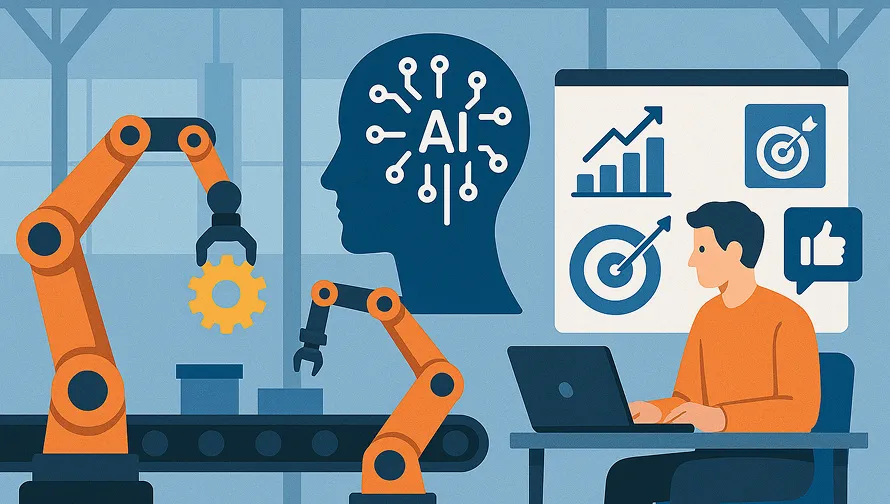
Artificial Intelligence (AI) is no longer limited to Silicon Valley tech companies it’s transforming factories, steel plants, and production floors across India.
From machine monitoring and predictive maintenance to AI-driven marketing and sales forecasting, manufacturers are using AI to work smarter, reduce downtime, and grow faster.

For leaders in the steel and industrial manufacturing sector, AI isn’t just about automation it’s about unlocking efficiency, accuracy, and growth at every stage of the value chain.

This article explores real-world AI use cases in manufacturing, backed by practical examples and measurable benefits helping you understand where and how to begin.

1. Predictive Maintenance: Stopping Breakdowns Before They Happen

Challenge:
In traditional steel factories, unexpected machine failures lead to production delays, high repair costs, and wasted materials.

AI Solution:
AI systems can predict equipment failure before it occurs by analyzing vibration, temperature, and sensor data.

Example:
A steel rolling plant in Jamshedpur implemented AI-based predictive maintenance using IoT sensors and machine learning models. Within six months:

  • Unplanned downtime dropped by 35%
  • Maintenance costs fell by 22%
  • Overall equipment efficiency (OEE) improved by 18%

💡 Benefit: AI turns reactive maintenance into proactive action saving time, cost, and client trust.

2. Quality Control with Computer Vision

Challenge:
Manual inspection in steel manufacturing is time-consuming and often misses microscopic defects that impact final product quality.

AI Solution:
AI-powered computer vision systems analyze real-time images from production lines to detect defects automatically.

Example:
A sheet metal manufacturer in Pune installed AI-based quality scanners.
Results:

  • Detection accuracy increased to 99.2%
  • Defect-related rework costs dropped by 40%
  • Product rejection rates went down from 5% to under 1%

Benefit: Better consistency, improved customer satisfaction, and reduced waste.

3. Energy Optimization: Smarter Power Use = Bigger Savings

Challenge:
Steel and heavy manufacturing plants consume huge amounts of energy often 20–30% more than needed due to inefficient processes.

AI Solution:
AI energy management systems use data from sensors and meters to optimize machine power usage and reduce wastage.

Example:
An integrated steel facility in Raipur deployed an AI-based energy optimization platform that learned consumption patterns across furnaces.
Within 4 months:

  • Energy costs fell by 19%
  • CO₂ emissions reduced significantly
  • Power usage became predictive based on production volume

Benefit: Lower operating costs and sustainability compliance without compromising output.

B2B manufacturing rebranding

4. Supply Chain Forecasting with AI Analytics

Challenge:
Fluctuating raw material prices and uncertain demand make supply chain management unpredictable for manufacturers.

AI Solution:
AI-driven analytics track global trends, order histories, and logistics data to forecast demand and optimize inventory.

Example:
A steel fabrication firm in Chennai integrated AI-based demand forecasting with its ERP system.

  • Overstocking reduced by 27%
  • Order delivery speed improved by 33%
  • Forecast accuracy increased to 92%

💡 Benefit: Data-backed decisions reduce stockouts and improve supplier relationships.

5. AI-Powered Marketing & Lead Generation for Manufacturers

Challenge:
Many steel and B2B manufacturers still rely on trade fairs, cold calls, or word-of-mouth for new clients. That model is slow and unpredictable.

AI Solution:
AI tools like ChatGPT, HubSpot AI, and LinkedIn Campaign Manager can now automate marketing, generate leads, and personalize communication.

Example (Kalk Solutions Case):
A mid-sized structural steel company in India worked with Kalk Solutions to implement an AI-driven marketing system:

  • ChatGPT-generated content optimized for Google
  • AI-assisted email outreach and ad targeting
  • Predictive lead scoring via CRM

Results after 90 days:

  • Website traffic grew 3.5x
  • Inquiries increased by 62%
  • Cost per lead dropped by 31%

💡 Benefit: With AI, manufacturers can finally market like tech companies measurable, fast, and data-driven.

6. Process Optimization and Workflow Automation

Challenge:
Manual planning and data entry slow down production cycles and cause human errors.

AI Solution:
AI-enabled ERP systems analyze production data and automatically suggest workflow optimizations, from scheduling to raw material allocation.

Example:
A fabrication SME in Gujarat introduced AI analytics within its ERP.
Results:

  • Production scheduling improved by 28%
  • Idle machine time reduced by 15%
  • Output increased by 12% without new hires

💡 Benefit: Smarter decisions, optimized workforce planning, and faster time-to-market.

7. AI for Safety and Compliance Monitoring

Challenge:
Workplace safety incidents can halt operations and cause major compliance penalties.

AI Solution:
AI-powered CCTV analytics and IoT sensors detect unsafe movements, PPE violations, or gas leaks in real time.

Example:
A large foundry in Maharashtra implemented AI-based safety monitoring using camera analytics.

  • Unsafe behavior incidents fell by 45%
  • Compliance reporting became automatic
  • Insurance premiums decreased due to improved risk records

Benefit: Safer work environments with fewer human and financial risks.

Summary: AI Use-Cases in Manufacturing at a Glance

Use Case

AI Function

Business Benefit

Predictive Maintenance

Machine learning on sensor data

30–40% less downtime

Quality Inspection

Computer vision

99% defect detection accuracy

Energy Optimization

AI-based energy analytics

Up to 20% cost reduction

Supply Chain

Predictive forecasting

25–30% better demand planning

Marketing & Sales

AI-driven lead generation

60% higher lead volume

Process Automation

ERP with AI insights

15–20% productivity boost

Safety Monitoring

Computer vision + IoT

40–50% fewer safety incidents

How AI Delivers Value Beyond the Factory Floor

AI is not just about production it’s about building data-driven business ecosystems.
From sales forecasting and supplier management to customer relationship building, AI connects all touchpoints of a modern manufacturing business.

💡 Quick wins for Indian manufacturers:

  • Use AI chatbots for instant B2B customer service
  • Implement AI analytics dashboards for executive decision-making

Run AI-assisted ad campaigns to reach global clients faster

Conclusion – The AI Shift Is Here. Are You Ready?

As India strengthens its “Make in India” and “Digital Manufacturing 2025” initiatives, AI adoption is now the competitive differentiator for steel and industrial manufacturers.

Those who start early even with small-scale pilots gain faster efficiencies, better marketing insights, and stronger client relationships.

At Kalk Solutions, we help manufacturers bridge the gap between machines and marketing using AI.
From predictive maintenance systems to AI-powered growth strategies, we tailor solutions for real-world factory success.

📩 Ready to explore AI for your manufacturing business?
Let’s build your AI roadmap practical, measurable, and built for 2025.

manufacturing mission vision design
Need Help? We're Here for You!

Got a question or need assistance? Our team is ready to help you every step of the way. Reach out to us, and we’ll get back to you as soon as possible!
Categories
Blog

7 Mistakes Manufacturers Make in Going Digital (and How to Avoid Them)

Blog

Why Going Digital Isn’t Always Smooth for Manufacturers

Digital transformation has become the defining opportunity for India’s steel and manufacturing industry. From predictive maintenance and smart factory automation to AI-powered marketing and CRM systems, the possibilities are endless.

Yet, many manufacturers jump into “going digital” without a structured plan and end up facing expensive setbacks, wasted time, and frustrated teams.

At Kalk Solutions, we’ve helped steel and industrial businesses in India transition successfully from manual systems to digital-first operations. Along the way, we’ve identified seven common mistakes manufacturers make during digital transformation and how you can avoid them with practical, cost-effective steps.

1. Mistake: Starting Without a Clear Digital Roadmap

Many manufacturing leaders begin digital initiatives reactively by installing an ERP, CRM, or automation tool without a long-term plan.

The problem:
Without defined goals or milestones, digital projects often lose direction, making it difficult to track ROI or progress.

How to fix it:

  • Start with a digital audit: Assess your operations, data readiness, and technology gaps.
  • Define SMART goals e.g., “Reduce downtime by 15% in 6 months” or “Automate quality tracking by Q2.”
  • Create a roadmap that aligns tech upgrades with business priorities not the other way around.

Tip: Use a simple 6–12 month roadmap with quarterly check-ins. Kalk Solutions provides ready-to-use templates for SME manufacturers.

2. Mistake: Overinvesting in Technology Too Early

Many SMEs believe digital transformation means expensive IoT systems, AI bots, or robotics. But for most, those come later in the journey.

The problem:
High upfront investments often lead to underutilized systems, poor adoption, and low ROI.

How to fix it:

  • Start small implement affordable tools first (like cloud-based CRMs, digital dashboards, or basic IoT sensors).
  • Scale gradually as you measure success.
  • Always calculate the ROI of each tool before purchase.

Example: A mid-size steel supplier in Gujarat cut costs by starting with cloud ERP integration before investing in IoT machinery, saving ₹12 lakhs annually.

3. Mistake: Ignoring Employee Training and Change Management

Your people make or break digital transformation. Technology alone doesn’t change anything unless your team knows how (and why) to use it.

The problem:
Untrained staff revert to old manual methods, leading to errors, delays, and tool misuse.

How to fix it:

  • Involve employees from day one.
  • Conduct regular digital training sessions especially for supervisors and machine operators.
  • Appoint a “Digital Champion” in each department to track adoption and feedback.

Tip: The Skill India Digital Manufacturing Initiative offers free upskilling modules for manufacturing teams.

manufacturing perception improvement

4. Mistake: Not Integrating Systems and Data

Many manufacturers digitize processes in silos one software for inventory, another for HR, another for sales but none talk to each other.

The problem:
Disconnected systems cause data duplication, inefficiency, and poor decision-making.

How to fix it:

  • Choose integrated platforms (e.g., Zoho One, SAP Business One, or TallyPrime with CRM add-ons).
  • Centralize your data dashboards one view for production, inventory, and sales metrics.
  • Regularly audit data consistency across departments.

Pro Tip: Kalk Solutions helps manufacturers set up data integration pipelines that connect existing tools instead of replacing them saving both cost and time.

5. Mistake: Neglecting Cybersecurity

As factories become more connected, cybersecurity becomes non-negotiable. Unfortunately, many SMEs still use shared logins, outdated systems, or unsecured Wi-Fi networks.

The problem:
Even a minor data breach can halt operations, leak client data, or damage trust.

How to fix it:

  • Use strong authentication (MFA) across systems.
  • Update passwords and software quarterly.
  • Train staff to spot phishing and suspicious activity.
  • Partner with a cybersecurity consultant familiar with industrial systems.

💡 Tip: The Ministry of MSME’s Digital Security Assistance Scheme (DSAS) offers partial reimbursement for small-scale cybersecurity investments.

6. Mistake: Measuring the Wrong Metrics (or None at All)

Digital transformation should produce measurable improvements not vanity metrics.

The problem:
Many manufacturers track “number of tools implemented” instead of operational or financial outcomes.

How to fix it: Measure ROI based on clear KPIs such as:

  • Production downtime reduction
  • Cost per unit decrease
  • Inquiry-to-order conversion rate
  • Energy efficiency per ton produced

Review progress every quarter and adjust tools or workflows accordingly.

Example: A fabrication SME in Pune saw a 22% increase in output after tracking machine utilization through IoT data without increasing labor hours.

7. Mistake: Treating Digital Transformation as a One-Time Project

Digital transformation is an ongoing process, not a one-off investment. Many companies stop after their first implementation phase, missing out on continuous improvement.

The problem:
Lack of iteration leads to stagnation, outdated tools, and missed innovation opportunities.

How to fix it:

  • Review and update your systems annually.
  • Keep exploring new automation and AI-based opportunities.
  • Encourage innovation teams or internal task forces to test emerging tools.

Tip: Treat digital transformation like product development prototype, test, and scale what works.

Checklist: Practical Steps to Avoid These Mistakes

Here’s a quick Digital Transformation Health Check for your manufacturing business:

Area

Check if…

Digital Roadmap

You have a written 6–12 month plan with KPIs

Tech Investment

Every tool purchase has a projected ROI

Employee Adoption

Your team is trained and using tools daily

System Integration

Data flows between departments seamlessly

Cybersecurity

Access controls, backups, and updates are active

Performance Metrics

You review key efficiency and sales KPIs quarterly

Continuous Improvement

You have a plan for ongoing digital upgrades

Practical Mitigation Timeline (6 Months)

Month

Focus Area

Action Plan

1

Audit & Goal Setting

Conduct digital readiness audit + set goals

2

Tool Selection

Choose affordable, scalable software

3

Implementation

Begin system setup & data digitization

4

Training & Adoption

Conduct staff training + internal workshops

5

Integration

Connect CRM, ERP, and IoT systems

6

Optimization

Review KPIs, refine strategy, plan next steps

Conclusion – Digital Done Right Means Sustainable Growth

The road to digital transformation isn’t about rushing to adopt every new technology it’s about building smarter, more connected operations step by step.

For manufacturers in the steel and industrial sector, avoiding these seven mistakes ensures that your digital journey delivers real value reduced costs, improved efficiency, and stronger competitiveness.

At Kalk Solutions, we specialize in helping manufacturers across India transform digitally strategically, affordably, and sustainably. From digital audits to AI-driven marketing and ERP setup, we help you turn transformation into tangible growth.

📩 Let’s make your digital transformation mistake-free.
Contact Kalk Solutions today to build your customized digital success roadmap.

industrial brand manuals
Need Help? We're Here for You!

Got a question or need assistance? Our team is ready to help you every step of the way. Reach out to us, and we’ll get back to you as soon as possible!
Categories
Blog

Industry 4.0: Step-by-Step Implementation Plan for SMEs

Blog

Why SMEs Can’t Afford to Delay Industry 4.0 Adoption

In India’s rapidly growing manufacturing ecosystem, Industry 4.0 is no longer a futuristic concept it’s a necessity.
Yet, most small and medium enterprises (SMEs), especially in the steel and heavy manufacturing sector, still see digital transformation as “too costly” or “too complex.”

But here’s the truth: you don’t need a multimillion-dollar setup to become an Industry 4.0-ready business. What you need is a clear roadmap, practical tools, and the right execution plan that fits your current scale.

This guide will break down in simple, actionable steps how Indian SMEs can implement Industry 4.0 technologies with a checklist, timeline, and measurable milestones, while staying budget-conscious.

What Is Industry 4.0 and Why It Matters for SMEs

Industry 4.0 represents the fourth industrial revolution the integration of digital technologies like IoT (Internet of Things), AI, data analytics, and automation into manufacturing operations.

For steel and manufacturing SMEs, it means:

  • Reducing downtime through predictive maintenance
  • Improving product quality with data insights
  • Digitizing operations for real-time tracking
  • Enhancing supply chain efficiency

Fact: According to the Ministry of Heavy Industries (India), SMEs that adopted Industry 4.0 practices saw a 20–35% improvement in operational efficiency within one year.

Challenges SMEs Face (And How to Overcome Them)

Before jumping into implementation, let’s address the biggest concerns Indian SMEs face:

Challenge

Common Issue

Solution

Limited budget

Can’t afford large automation systems

Start small use affordable IoT sensors, cloud tools, and ERP systems

Lack of digital skills

Teams aren’t trained

Upskill staff through free MSME & Skill India programs

Legacy systems

Old machinery and manual data

Add sensors and APIs instead of replacing equipment

Fear of disruption

Operations may slow down during transition

Implement in phases with clear milestones

Key takeaway: Start with scalable, low-cost solutions not full overhauls.

Industry 4.0 Implementation Plan for SMEs (Step-by-Step)

Below is a 6-step roadmap for implementing Industry 4.0 in your manufacturing business from assessment to measurable ROI.

Step 1: Assess Your Current Readiness
Before investing, evaluate where your factory currently stands.

Checklist:

  • Is your machinery compatible with digital tracking or sensors?
  • Are your operations recorded manually or digitally?
  • Do you already use ERP or CRM systems?
  • How is production data stored and used?

Tool Tip: Use “Industry 4.0 Readiness Assessment” from the Ministry of MSME or Kalk Solutions’ free digital audit template.

Timeline: 2 weeks
Example: A steel fabrication SME in Pune found 70% of its processes were still manual but could integrate IoT sensors without machinery replacement.

Step 2: Define Your Digital Goals and KPIs
Digital transformation must align with your business priorities not just technology trends.

Example Goals:

  • Reduce production waste by 10% in 6 months
  • Automate inventory management within 3 months
  • Increase output per shift by 15% through machine monitoring

Set measurable KPIs:

  • Downtime hours
  • Machine utilization rate
  • Lead time reduction
  • Cost per unit

Timeline: 1 week

Step 3: Choose the Right Technology Stack (Start Small)
SMEs don’t need advanced robotics to implement Industry 4.0. Start with modular, scalable tools that give maximum ROI.

Recommended low-cost tools for SMEs:

Category

Example Tools/Technologies

Cost Range

IoT Sensors

Siemens MindSphere, Arduino IoT Cloud

₹10,000–₹50,000 per machine

Data Collection

Google Sheets + Power BI dashboards

Free to ₹2,000/month

ERP/CRM

Zoho ERP, TallyPrime, HubSpot

₹1,000–₹5,000/month

Predictive Analytics

ChatGPT, Tableau, Microsoft Copilot

Free–₹3,000/month

Maintenance Tracking

Fiix CMMS, MaintainX

Free–₹1,500/month

Pro tip: Choose tools that integrate easily with your existing systems to avoid large IT investments.

Timeline: 2–3 weeks

Step 4: Digitize and Automate Key Processes
Start with the highest-impact areas first those that cause frequent delays, errors, or inefficiencies.

Quick wins for steel and manufacturing SMEs:

  • Install IoT sensors for monitoring temperature, vibration, or load.
  • Automate reports using Google Data Studio or Power BI.
  • Digitize your maintenance logs instead of paper-based records.
  • Use barcode systems for raw material and finished goods tracking.

Timeline: 1–2 months
Example: A fabrication plant in Gujarat reduced 40% of manual report errors after digitizing quality control using QR-based tracking.

Step 5: Train Your Team and Build a Digital Culture
Technology adoption fails if your team isn’t ready for it.

Checklist for training phase:

  • Train supervisors on IoT dashboards and data entry
  • Educate machine operators about data importance
  • Encourage reporting of insights and suggestions
  • Assign a “Digital Champion” internally

Local Incentive: The Skill India Program and MSME Champions Scheme offer free digital upskilling workshops for factory employees.

Timeline: 1 month
Tip: Start weekly “digital review meetings” to track adoption progress and identify improvement areas.

Step 6: Monitor, Optimize, and Scale
Once systems are running, focus on data-driven optimization.

Key monitoring metrics:

  • Machine efficiency (OEE%)
  • Unplanned downtime
  • Energy consumption per output unit
  • Lead time from order to dispatch

Scale-up strategy:

  • Connect all departments under one ERP system.
  • Add AI analytics to forecast demand or maintenance schedules.
  • Integrate supply chain partners for real-time collaboration.

Timeline: Continuous (review every 3 months)
Example: After 6 months, a medium-scale steel supplier in Tamil Nadu integrated AI-based forecasting, reducing stockouts by 22%.

industry-focused brand communication

Industry 4.0 Implementation Timeline (6-Month Roadmap)

Month

Key Focus

Milestones

Month 1

Digital Readiness & Goal Setting

Complete readiness audit + define KPIs

Month 2

Tech Selection

Choose IoT, ERP, or automation tools

Month 3–4

Implementation

Deploy tools + start digital data collection

Month 5

Training & Cultural Adoption

Upskill team + internal champions

Month 6

Optimization & Scale

Evaluate results, optimize systems, expand usage

Note: Keep the process agile adjust based on performance and feedback.

Government Incentives for Industry 4.0 in India (2025 Update)

Scheme

Benefit

Eligibility

MSME Champions 4.0 Initiative

25–50% subsidy for digital adoption and IoT setup

Registered MSMEs

SAMARTH Udyog Bharat 4.0

Access to Smart Factory demo centers and consultation

Manufacturing units

Digital India MSME Program

Grants for ERP and cloud system implementation

Small to mid-sized enterprises

Skill India Digital Manufacturing Training

Free training for workforce on Industry 4.0 tech

MSMEs & industrial clusters

Common Mistakes to Avoid

  • Trying to do everything at once
  • Buying expensive tools without assessing ROI
  • Ignoring staff training and process alignment
  • Not setting measurable performance goals

Remember: Industry 4.0 is a journey, not a one-time project.

Conclusion – Future-Proofing Your SME for the Next Decade

By 2030, nearly 70% of manufacturing output in India will involve some level of Industry 4.0 integration from IoT-driven production to AI-based decision-making.

For steel and industrial SMEs, early adoption isn’t just a competitive advantage it’s a growth multiplier.

With the right step-by-step implementation plan, clear ROI tracking, and support from government incentives, even small factories can transform into data-driven smart enterprises without overspending.

At Kalk Solutions, we help Indian manufacturers design and execute affordable Industry 4.0 roadmaps, combining strategy, automation, and digital marketing for measurable growth.

📩 Let’s build your Industry 4.0 roadmap together.
Contact Kalk Solutions today for a customized digital transformation audit.

engineering high-ticket branding
Need Help? We're Here for You!

Got a question or need assistance? Our team is ready to help you every step of the way. Reach out to us, and we’ll get back to you as soon as possible!
Categories
Blog

How Indian Manufacturers Can Digitally Transform with Minimal Investment

Blog

Why Digital Transformation Is No Longer Optional

India’s manufacturing and steel industry is evolving faster than ever. From Bharat’s push for “Make in India 2.0” to the rise of smart factories, every industrial leader now faces the same question:

How can we go digital without breaking the bank?
The truth is, digital transformation doesn’t always require massive budgets or complex technologies. What it really needs is the right strategy, phased execution, and the willingness to adapt.

At Kalk Solutions, we’ve worked with multiple steel and manufacturing companies across India helping them adopt digital tools, streamline operations, and build stronger B2B visibility with minimal investment.

This guide shows how Indian manufacturers can achieve digital transformation efficiently, step by step while staying practical, data-smart, and cost-conscious.

Understanding Digital Transformation in Manufacturing

Digital transformation means using technology to improve how your business operates, produces, and connects with customers.

For manufacturers, this can include:

  • Automating manual processes (inventory, procurement, or sales tracking)
  • Implementing CRM and ERP tools for better decision-making
  • Using digital marketing to reach new clients globally
  • Leveraging data analytics for production and demand forecasting

You don’t need to invest in Industry 4.0 robots right away start with digital systems that deliver immediate ROI.

Why Digital Transformation Is Urgent for Indian Steel Manufacturers

The Indian steel and heavy manufacturing sector is at a turning point:

  • Government Push: “Digital India” and PLI (Production Linked Incentive) schemes reward tech adoption.
  • Competition: Global clients now prefer suppliers with digital processes and transparent data systems.
  • Efficiency: Manual operations lead to higher costs and missed deadlines.

Local Incentive Example:
Under India’s MSME Digital Growth Initiative, small and mid-size manufacturers can access subsidies and tax benefits when adopting ERP software or digital marketing systems.

Takeaway: Start small but start now. Even modest digital improvements can drastically reduce inefficiencies and open new B2B opportunities.

Step-by-Step: How to Digitally Transform with Minimal Investment

Step 1: Start with Digital Presence (Website + SEO)
Your website is your 24/7 sales representative.
Many Indian steel companies still rely only on WhatsApp or trade platforms, losing out on credibility.

Low-cost actions:

  • Build or update a professional, mobile-friendly website.
  • Optimize it for SEO keywords like “steel suppliers in India” or “fabrication contractors near me.”
  • List on Google My Business and industry directories.

Result: Clients find you faster, inquiries increase, and you start generating organic leads.

Step 2: Automate Sales & Customer Management (CRM Systems)
Instead of relying on Excel sheets or manual follow-ups, use affordable CRMs like Zoho CRM, HubSpot Free, or TallyPrime.

What this does:

  • Tracks all inquiries and client interactions in one place.
  • Sends automatic reminders and quotes.
  • Provides data for sales forecasting.

Cost: Starting from ₹0/month (for basic CRM plans)
ROI: 30–40% improvement in lead follow-up and customer retention.

Step 3: Embrace Digital Marketing Over Traditional Ads
Traditional ads in trade magazines or exhibitions cost lakhs and offer no measurable ROI.

Instead:

  • Run LinkedIn ads targeting procurement heads, engineers, or developers.
  • Use email marketing to nurture past leads.
  • Invest in content marketing share case studies, videos, and insights.

Budget Tip: Even a monthly spend of ₹15,000–₹25,000 on Google Ads or SEO can generate measurable results within 3 months.

Step 4: Adopt Predictive Analytics and AI Tools
Once you’ve collected enough data, tools like Google Analytics 4, ChatGPT, or HubSpot AI can predict trends and guide smarter decisions.

Example Use Case for a Steel Company:
“Which regions are most likely to demand structural steel next quarter?”
Predictive analytics can forecast demand based on project pipelines, past inquiries, and online search trends.

ROI Impact: Better forecasting = optimized inventory + reduced idle costs.

Step 5: Digitize Operations Gradually
You don’t need a full-scale factory automation system immediately. Start with basic digital systems:

  • Implement barcoding for material tracking
  • Use IoT-based temperature or quality sensors (available under MSME subsidies)
  • Integrate accounting software with logistics dashboards

Government Incentive:
The Ministry of Heavy Industries’ Digital Manufacturing Initiative provides up to 25% financial support for adopting smart manufacturing systems under the Industry 4.0 framework.

industrial brand loyalty creation

Case Study: How One Indian Steel Fabricator Digitally Transformed in 6 Months

Client: Mid-sized steel fabrication firm, Pune
Challenge: Manual marketing and project coordination led to missed leads and slow sales.
Solution (via Kalk Solutions):

  • Built a search-optimized website with lead capture tools
  • Integrated HubSpot CRM for inquiry automation
  • Ran a targeted LinkedIn campaign for builders and architects
    Result:
  • Website inquiries grew 3.8x in 90 days
  • Sales coordination time dropped by 45%

Monthly revenue increased by 27%, all with under ₹80,000 in total digital investment

Local Incentives for Manufacturers in India (2025 Update)

Here are some government-backed programs that can help manufacturers digitize affordably:

Scheme/Initiative

Benefit

Eligibility

MSME Digital Growth Scheme

Up to 50% subsidy for ERP or CRM adoption

MSME Registered Units

Make in India 2.0 – Digital India Program

Financial incentives for adopting AI/IoT-based systems

Manufacturing units with export focus

Technology Upgradation Fund (TUF)

20–25% reimbursement on digital system purchases

Small to mid-sized factories

Startup India for Industry 4.0

Tax exemption for new digital ventures

Startups under 10 years old

Tip: Even if you’re a medium enterprise, collaborating with a tech partner like Kalk Solutions helps structure digital adoption plans aligned with government incentives.

How to Measure ROI of Digital Transformation

Digital doesn’t mean spending more it means spending smarter.
Track your progress using these ROI indicators:

Metric

Before Digitalization

After Digitalization (6 months)

Lead response time

2–3 days

Instant (automated)

Customer acquisition cost

₹4,000–₹6,000

₹1,800–₹2,200

Inquiry-to-order conversion rate

2%

6–8%

Operational errors

Frequent manual errors

Reduced by 50%+

Result: Within months, digital transformation starts paying for itself.

Kalk Solutions’ Approach to Cost-Effective Digital Transformation

At Kalk Solutions, we focus on practical digital adoption, not expensive tech overhauls.

Our process:

  1. Audit your current systems (sales, marketing, and operations)
  2. Identify digital quick wins with the highest ROI
  3. Set up AI tools, CRMs, and marketing systems within your budget
  4. Train your internal teams for sustainability

We’ve helped Indian manufacturers in steel, prefab, and heavy engineering build full digital ecosystems starting under ₹1 lakh with visible results in under 90 days.

Conclusion – Digital Transformation Is Affordable, Achievable & Essential

In 2025, digital transformation isn’t about having the biggest tech budget it’s about making smarter, data-driven moves that increase visibility, reduce inefficiency, and future-proof your business.

For Indian manufacturers, especially in the steel and construction ecosystem, the digital path is clear:

  • Start small
  • Leverage incentives
  • Build systematically

At Kalk Solutions, we help Indian manufacturers digitally transform with minimal investment combining AI-powered marketing, automation tools, and practical strategies for long-term growth.

📩 Let’s make your business the next success story.
Contact Kalk Solutions today to build your digital roadmap affordably and efficiently.

branding for long sales cycle industries
Need Help? We're Here for You!

Got a question or need assistance? Our team is ready to help you every step of the way. Reach out to us, and we’ll get back to you as soon as possible!

Categories
Blog

Predictive Analytics in Marketing: A Beginner’s Guide for the Steel Manufacturing Industry (2025 Edition)

Blog

Introduction – The Power of Predictive Thinking in Modern Marketing

In today’s competitive B2B landscape, especially for steel and manufacturing companies, marketing can no longer rely on assumptions or generic outreach. Decision-makers demand data-backed precision — knowing who’s likely to buy, when, and why.

That’s where predictive analytics in marketing comes in.

Predictive analytics uses AI, data modeling, and machine learning to forecast customer behavior, market trends, and campaign outcomes — helping businesses make smarter marketing decisions.

At Kalk Solutions, we’ve helped steel manufacturers, fabricators, and industrial suppliers implement predictive models that turn raw data into reliable growth strategies.

If you’re new to this concept, this guide will help you understand what predictive analytics is, how it works, and how it can transform marketing in the manufacturing and steel industries.

1. What Is Predictive Analytics in Marketing?

Predictive analytics marketing is the process of analyzing historical data — like website visits, customer interactions, and campaign results — to predict future outcomes.

In simpler terms, it answers questions such as:

  • Which clients are most likely to buy next quarter?
  • What kind of campaigns will deliver the highest ROI?
  • Which leads will turn into long-term customers?

It’s not about guessing — it’s about forecasting behavior using data and AI.

2. How Predictive Analytics Works in Marketing

Predictive analytics follows a three-step process:

Step 1: Data Collection
Collect data from various sources — CRM systems, email campaigns, ad analytics, social media, and sales history.

Step 2: Pattern Identification
AI algorithms find relationships between customer actions and outcomes — for example, identifying that contractors who visit your “steel fabrication” page twice are 60% more likely to request a quote.

Step 3: Prediction and Action
Once patterns are identified, predictive models can forecast what’s likely to happen — allowing your marketing team to take action before opportunities are missed.

3. Real-World Use Case: Predictive Analytics in Steel Manufacturing Marketing

Let’s look at a practical example from the steel industry.

Challenge:
A steel supplier in India struggled to identify which leads from Google Ads were actually worth pursuing. Sales teams were wasting time on low-quality leads.

Solution:
By implementing predictive analytics with Kalk Solutions, the system began tracking engagement data such as:

  • Time spent on the pricing page
  • Product categories viewed (e.g., structural steel, prefab units)
  • Downloaded brochures or contact form interactions

The predictive model then scored each lead based on conversion likelihood.

Results:

  • Lead qualification time reduced by 40%
  • Marketing ROI improved by 2.5x
  • Sales team focused only on high-intent leads

Takeaway: Predictive analytics helped the company shift from reaction-based marketing to anticipatory marketing — knowing what the customer wanted before they even reached out.

manufacturing branding firms

4. Top Marketing Applications of Predictive Analytics

Here’s how predictive analytics can revolutionize marketing for manufacturing and steel companies:

a. Predictive Lead Scoring
Prioritize leads that are most likely to convert, based on behavioral and demographic data.

Example Prompt:
“Show leads who viewed our steel product catalog and returned to the site within 7 days.”

b. Campaign Performance Forecasting
Predict which campaign types will generate the best results before you spend.

Example Insight:
Predictive tools may reveal that LinkedIn Ads targeting project managers perform 3x better than cold email outreach.

c. Customer Retention Prediction
Anticipate when a long-term client might stop ordering — and re-engage them with personalized offers.

Example:
If a client’s order frequency drops by 25%, the model alerts marketing to run a retention campaign.

d. Product Demand Forecasting
Plan inventory and promotions more efficiently by predicting which products will be in demand.

Example:
“Demand for prefabricated steel units increases by 15% in Q2 — plan campaigns accordingly.”

5. Predictive Analytics Tools You Can Start With

Even if you’re new to analytics, several tools make predictive marketing easier for industrial brands:

Tool

Best For

Key Benefit

HubSpot Marketing Hub

Lead scoring and behavior tracking

Seamless CRM integration

Google Analytics 4 (GA4)

Traffic and conversion prediction

AI-driven insights

Salesforce Einstein

Advanced predictive modeling

Great for enterprise B2B setups

Klaviyo AI

Email performance prediction

Automated audience segmentation

ChatGPT + Excel/Sheets

Data summarization

Simplified pattern analysis for small teams

6. Predictive Analytics vs. Traditional Marketing — ROI Difference

Metric

Traditional Marketing

Predictive Analytics Marketing

Lead Conversion Rate

1.5%–2.5%

4%–6%

Customer Retention Rate

60%

80%+

Cost per Lead

High

Reduced by 35%–50%

Campaign Efficiency

Reactive

Proactive

Reporting

Manual & delayed

Automated & real-time

Key Insight: Predictive analytics enables data-backed decision-making, turning every marketing action into a measurable investment rather than a gamble.

7. How Steel Industry Leaders Can Start

If you’re in the steel or heavy manufacturing sector, here’s a roadmap to begin:

  1. Centralize Your Data – Integrate CRM, sales, and marketing systems.
  2. Identify Key Metrics – Focus on customer lifetime value (CLV), cost per acquisition (CPA), and engagement rates.
  3. Choose the Right Tools – Platforms like HubSpot or Google Cloud AI can automate data insights.
  4. Train Your Team – Align sales and marketing teams to act on predictive insights.

Partner with Experts – Agencies like Kalk Solutions specialize in industrial marketing powered by predictive analytics.

8. The Future: Predictive Marketing + Generative AI

In 2025, predictive analytics is becoming even more powerful when paired with Generative AI tools like ChatGPT or Jasper.

Imagine this:

  • Predictive analytics identifies which leads are most likely to convert.
  • Generative AI then automatically creates personalized email campaigns for those leads.

This combination of prediction and automation is redefining how steel brands communicate — with higher accuracy, faster turnaround, and greater ROI.

Conclusion – Data is the New Steel in Marketing

Just as steel builds strong structures, data builds strong marketing strategies.

Predictive analytics gives manufacturing and steel industry leaders the ability to see what’s coming next — and act before the competition.

At Kalk Solutions, we help industrial brands harness predictive analytics to forecast demand, improve engagement, and increase conversions — using AI-powered tools built for measurable growth.

📩 Ready to bring predictive marketing to your business?
Let’s build your next data-driven campaign today.

engineering branding companies
Need Help? We're Here for You!

Got a question or need assistance? Our team is ready to help you every step of the way. Reach out to us, and we’ll get back to you as soon as possible!

Categories
Blog

Generative AI vs Traditional Marketing: A Real ROI Comparison for Steel Industry Leaders (2025 Guide)

Blog

The Marketing Shift Every Steel Industry Leader Must Understand

For decades, the steel and manufacturing industry relied on traditional marketing methods trade fairs, brochures, word-of-mouth, and B2B sales networks. These channels built trust, but in today’s fast-paced, data-driven world, they no longer deliver the same return on investment (ROI) or scalability.

Enter Generative AI marketing a new era where artificial intelligence doesn’t just automate tasks but creates content, analyzes performance, and personalizes campaigns in ways traditional methods never could.

At Kalk Solutions, we’ve seen this transformation firsthand while helping steel industry clients transition from traditional marketing to AI-powered strategies that drive measurable growth.

Let’s dive into a real, data-backed comparison between Generative AI vs Traditional Marketing so you can make smarter decisions for your business in 2025.

1. Understanding the Core Difference

Aspect

Traditional Marketing

Generative AI Marketing

Approach

Human-driven, manual processes

Data-driven, automated intelligence

Speed

Weeks or months to plan

Instant campaign creation & optimization

Cost Efficiency

High creative and media costs

Lower content and ad management costs

Scalability

Limited by manpower

Scales effortlessly across platforms

Personalization

One-size-fits-all messaging

AI adapts to audience intent in real-time

Takeaway: Generative AI doesn’t replace creativity, it amplifies human marketing efficiency, delivering results faster and cheaper.

industrial marketing competitors

2. ROI Comparison: Numbers Tell the Story

Let’s look at what our internal data and recent client outcomes show when comparing ROI between Generative AI and Traditional Marketing for steel manufacturers.

Metric

Traditional Marketing ROI

Generative AI ROI

Lead Cost

$180–$250 per qualified lead

$40–$70 per qualified lead

Campaign Turnaround Time

3–4 weeks

1–3 days

Content Production Cost

$2,000+ per campaign

$300–$500 with AI tools

Engagement Rate

1.2–2.5%

5–8% (AI-personalized campaigns)

Conversion Rate

0.8–1.5%

3–5% (AI-optimized targeting)

Key Insight: On average, AI-powered campaigns generate 3x higher ROI than traditional marketing in B2B industries like steel, construction, and manufacturing.

3. Traditional Marketing: Where It Still Works

It’s not all obsolete; traditional marketing still holds value in specific use cases, especially in relationship-driven B2B industries.

Effective Traditional Channels:

  • Industry expos and trade shows (great for networking)
  • Print media in niche engineering journals
  • In-person events and corporate sponsorships

Limitation: These channels are hard to track and expensive to scale often delivering branding value but weak ROI compared to AI-based digital efforts.

4. Generative AI Marketing: What Makes It More Powerful

Generative AI isn’t just a trend, it’s a fundamental change in how marketing decisions are made and executed.

a. Personalized Content at Scale
AI tools like ChatGPT, Jasper, and HubSpot AI generate personalized ad copy, blogs, and emails in seconds customized for different buyer personas (architects, contractors, or procurement heads).

b. Predictive Campaign Optimization
AI analyzes campaign data in real time reallocating budgets toward top-performing ads, saving up to 30% in wasted ad spend.

c. Enhanced Creative Ideation
AI models like Midjourney and Runway help generate visual concepts for product brochures, infographics, and case studies without a full-time design team.

Example:
A Dubai-based steel manufacturer using Kalk Solutions’ AI-driven marketing system saw a 210% increase in qualified leads and a 45% reduction in content costs within 90 days.

5. Real-World Example – Traditional vs AI Campaign

Let’s compare two real-world campaigns for a steel fabrication company in India:

Campaign Type

Traditional (Print & Events)

Generative AI (Digital & Automated)

Objective

Build brand visibility

Generate leads & nurture conversions

Duration

3 months

1 month

Total Cost

₹6,00,000+

₹2,00,000

Leads Generated

70

250+

Follow-up Automation

Manual

AI-integrated CRM (HubSpot)

ROI Growth

1.5x

4.2x

Result: The AI-driven campaign produced nearly 3x more qualified leads with one-third of the budget proving that data-backed AI systems outperform legacy methods.

6. The Hybrid Approach – The Best of Both Worlds

The smartest steel marketing leaders aren’t choosing between AI and traditional, they’re combining both.

Here’s how to do it effectively:

  • Use Generative AI for content, campaign planning, and analytics.
  • Leverage Traditional marketing for relationship building, branding, and credibility at industry expos.
  • Connect both through a unified CRM and automation platform for holistic ROI tracking.

This hybrid model delivers the emotional trust of traditional methods with the measurable efficiency of AI a winning strategy for 2025 and beyond.

7. Future Outlook: The AI Advantage Is Just Beginning

By 2026, over 80% of B2B industrial marketers are expected to integrate AI tools into their strategy (Source: Statista).

For the steel and construction industries, where margins are tight and decisions are technical, AI enables smarter storytelling, faster conversions, and precise targeting without increasing cost.

Conclusion – Rethinking ROI with Generative AI

The era of static brochures and guess-based campaigns is over.

Generative AI marketing is redefining how steel manufacturers attract clients, build trust, and optimize spend.
While traditional methods still play a part, the future belongs to companies that embrace intelligent automation and data-backed creativity.

At Kalk Solutions, we help steel industry leaders adopt AI tools and frameworks that deliver real results from content creation to performance marketing and CRM integration.

📩 Ready to elevate your marketing ROI?
Talk to our AI marketing experts today and discover how Generative AI can outperform traditional marketing for your business.

branding agency for industrial sector
Need Help? We're Here for You!

Got a question or need assistance? Our team is ready to help you every step of the way. Reach out to us, and we’ll get back to you as soon as possible!
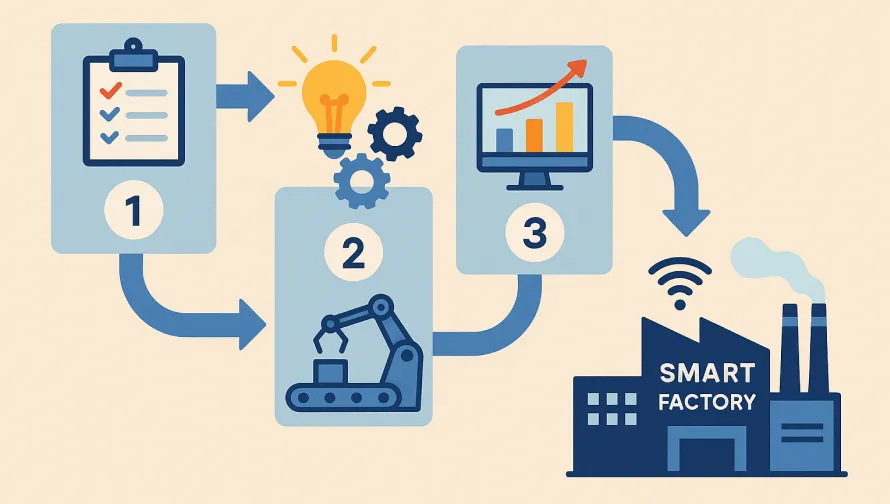
Get Your Free Growth Audit.
See Why Buyers Aren’t Finding You!

Trusted by 50+ Manufacturers Across India & UAE

content strategy for manufacturers