Growth
Capability Pages That Win RFQs: What to Show for CNC, Stamping and Fabrication
 Kalk Solutions Editorial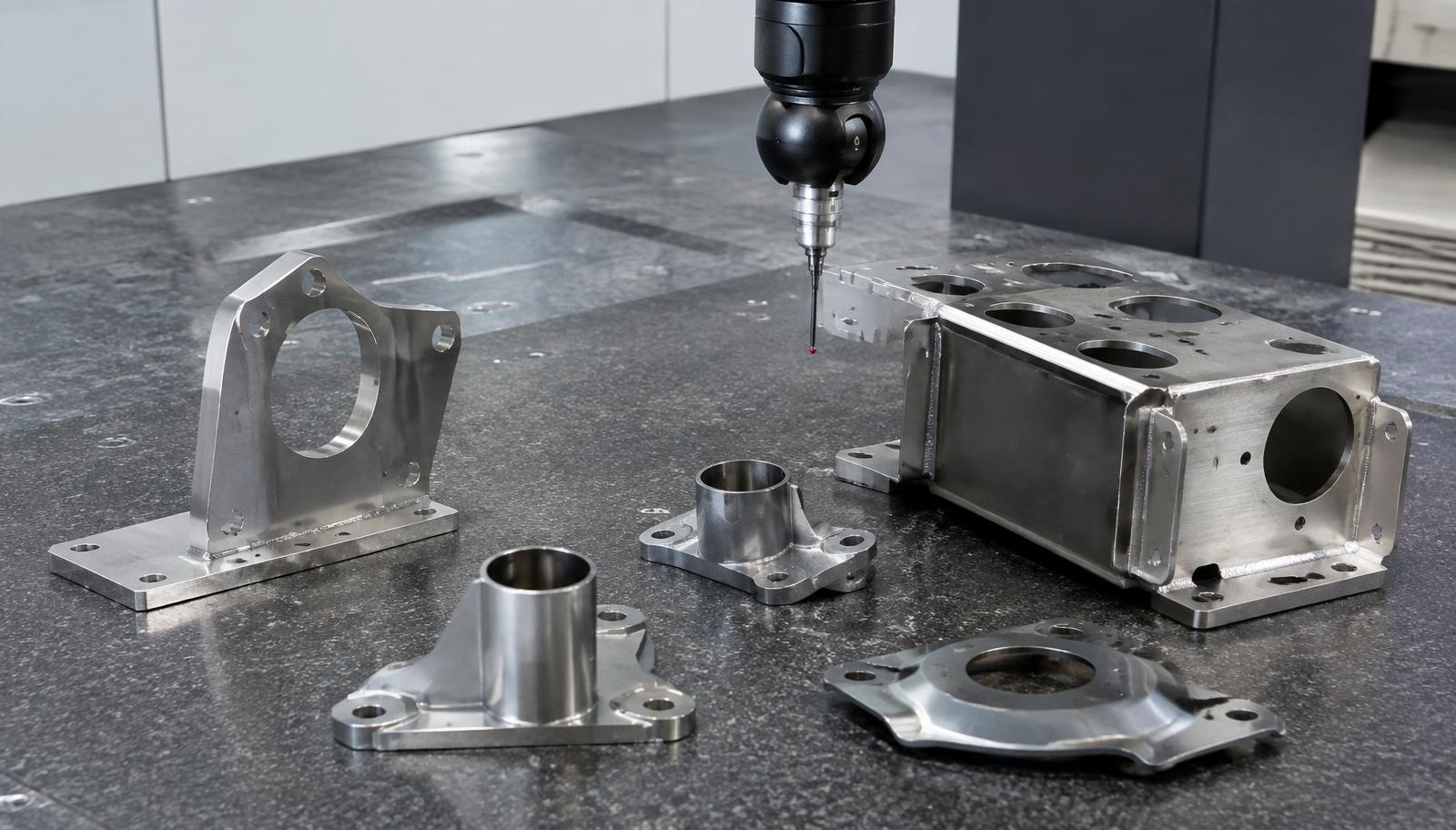
TL;DR
A capability page wins RFQs when an engineer can confirm fit in under a minute. Every page needs the process, equipment and envelope, materials, tolerances and volumes, quality and inspection, industries served, example parts, FAQs and a short RFQ path. CNC pages should stress axes, envelope and tolerances; stamping pages should stress press tonnage, bed size, die capability and volumes; fabrication pages should stress cutting, forming, welding certifications and assembly.
Quick answers
- What should a manufacturing capability page include?
- Process description, equipment list with sizes, materials, tolerances, volume range, quality and inspection, certifications, industries, example parts, FAQs and an RFQ form with drawing upload.
- Should each process have its own page?
- Yes. One page per core process ranks better and lets buyers confirm fit quickly. Add industry pages that link to the relevant processes.
- How long should a capability page be?
- Long enough to answer an engineer's questions: usually 600 to 1,200 words plus tables and photos. Specifics matter more than length.
Most manufacturing websites have a "Capabilities" page that lists ten processes in one paragraph. Buyers cannot confirm fit, search engines cannot rank it, and AI assistants cannot quote it. One strong page per process changes all three.
The universal capability page structure
Atomic answer: a capability page should let an engineer confirm process fit, size, material, tolerance, quality and volume in under a minute, then request a quote.
| Section | What to include |
|---|---|
| H1 | Process + key qualifier + location, for example "5-Axis CNC Machining for Aerospace, Dayton OH" |
| Summary | 2 to 3 sentences: what, for whom, in what range |
| Equipment | Make, model, axes or tonnage, envelope |
| Materials | Metals and plastics you run regularly |
| Tolerances | Typical and best achievable, with conditions |
| Volumes | Prototype to production range |
| Quality | Certifications, inspection equipment, documentation (FAI, PPAP) |
| Industries | Sectors and part types |
| Examples | 3 to 6 real parts with photos |
| FAQs | 4 to 6 real buyer questions |
| RFQ | Short form, drawing upload, response promise |
CNC machining pages
Buyers check: axes, envelope, spindle speed, materials, tolerances, finishes and inspection.
| Must show | Example |
|---|---|
| Machines | "4x 5-axis (Hermle C42, DMG MORI DMU 50), 6x 3-axis VMC" |
| Envelope | "Up to 31 x 24 x 20 in" |
| Materials | Aluminum, stainless, titanium, Inconel, PEEK |
| Tolerances | "Typical plus or minus 0.001 in, down to plus or minus 0.0002 in on select features" |
| Inspection | CMM, optical comparator, surface roughness |
| Secondary ops | Anodize, passivation, heat treat (in-house or partner) |
Separate pages for milling, Swiss turning and EDM usually perform better than one combined page.
Metal stamping pages
Buyers check: press tonnage, bed size, die types, material thickness, volumes and in-die capability.
| Must show | Example |
|---|---|
| Presses | "Progressive presses 60 to 400 tons" |
| Bed size | Largest bed dimensions |
| Die capability | Progressive, transfer, in-house tool room |
| Materials and thickness | Steel, stainless, aluminum, copper; gauge range |
| Volumes | "50,000 to 5 million pieces per year" |
| Quality | IATF 16949, PPAP levels, in-die sensing |
Fabrication pages
Buyers check: cutting, forming, welding processes and certifications, size and assembly.
| Must show | Example |
|---|---|
| Cutting | Fiber laser (power, sheet size), plasma, waterjet |
| Forming | Press brakes (tonnage, length), rolling |
| Welding | MIG, TIG, robotic; AWS D1.1 or other certified procedures |
| Size | Largest weldment and lifting capacity |
| Finishing | Powder coat, paint, galvanizing (in-house or partner) |
| Assembly | Mechanical, electrical, testing |
Writing for search and AI answers
- Use the words buyers type: process, material, industry, location.
- Start each section with a direct one-sentence answer.
- Keep facts consistent with your Google Business Profile and directories.
- Add FAQ and Service structured data.
See how engineers use ChatGPT to find suppliers and our CNC capability page checklist.
Common mistakes
- One page for all processes
- No equipment sizes or tolerances
- Stock photos
- Certifications only in the footer
- No way to upload a drawing
Next step
Find out whether your capability pages show up when buyers search. Run the free Buyer Reach Audit or see how we build them on our USA page.
Related: Why your manufacturing website gets traffic but no RFQs and How small machine shops can win reshoring work.
60-second live scan
See where your buyers are searching - right now.
Run your buyer-intent keywords through live Google. Get a competitor map and ranking gaps in 60 seconds. Free, no pitch.
Run my free Buyer Reach AuditPrefer a working session?
Book a 30-min call with our team.
No pitch. Walk away with a written action plan - whether you hire us or not.
Book a strategy callFor US manufacturers
Tired of ThomasNet junk leads?
Run a free 60-second audit of where your buyers are searching in the US. Get a real diagnosis — no pitch.
Questions about this topic
Can I list customers on capability pages?
Only with permission. Otherwise describe industries and part types, for example 'tier 1 automotive brackets'.
Should I publish tolerances if they vary?
Yes, as typical and best achievable ranges with conditions. Buyers need a starting point.
Do photos matter?
A lot. Real photos of parts, machines and inspection build trust far more than stock images.
Related field guides