US Manufacturing
How to Build an Owned OEM Lead Pipeline
 Kalk Solutions Editorial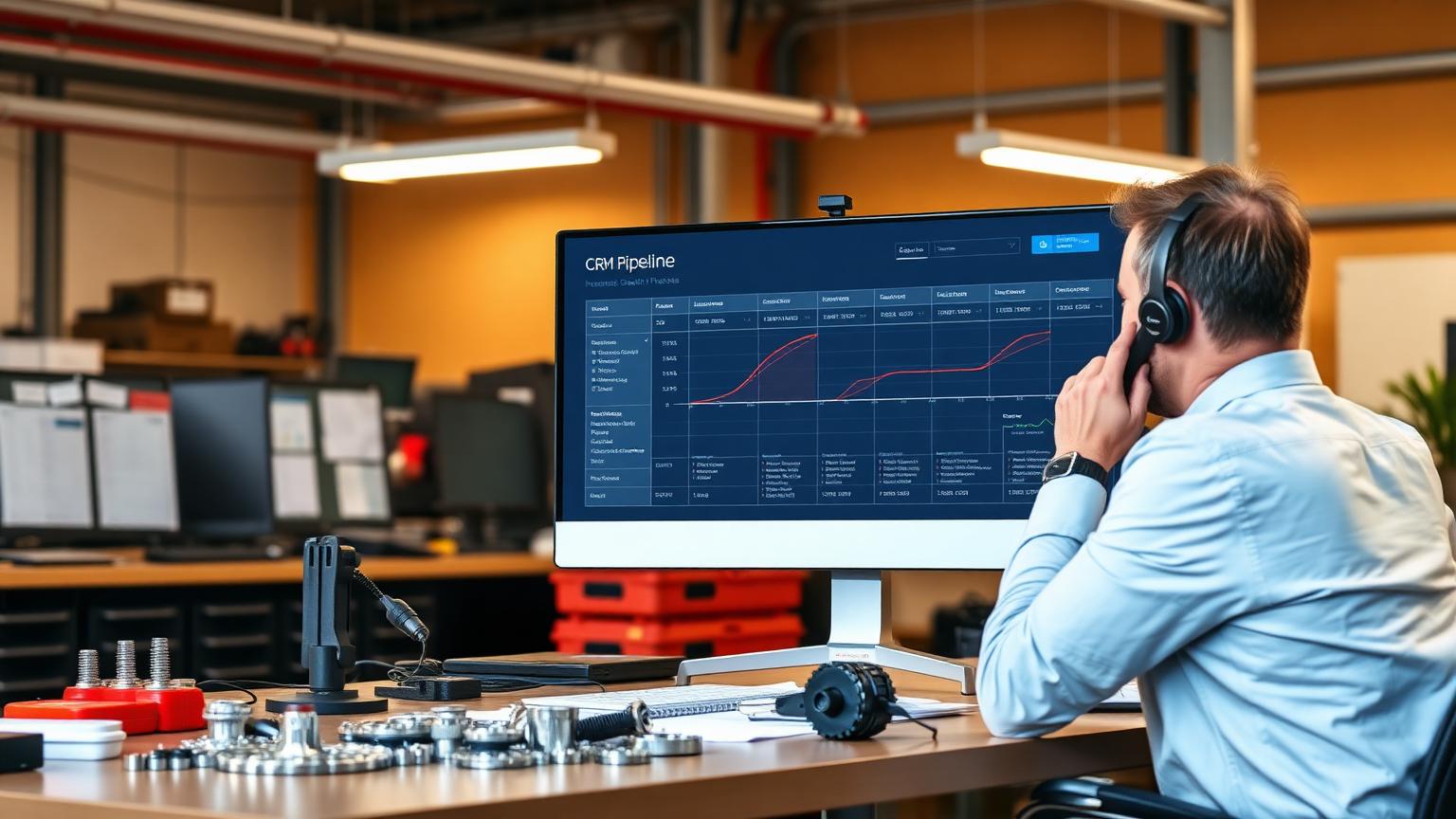
TL;DR
An owned lead pipeline compounds over time: capability pages, target account research, and search/AI discoverability keep generating RFQs even when you stop actively working a channel that week. This post lays out the system, and where it needs to hand off cleanly into your CRM and ERP so RFQs don't die in someone's inbox.
Quick answers
- What does 'owned' mean in an owned OEM lead pipeline?
- Owned means the assets generating RFQs, your website, capability pages, and search/AI visibility, belong to you and keep producing results without ongoing ad spend, unlike a rented channel like paid search or a directory listing.
- What are the core components of an owned pipeline?
- A scored target account list, capability pages built around real buyer search behavior, ongoing search and AI discoverability work, and a CRM/ERP handoff so incoming RFQs get tracked and quoted without falling through.
- How is this different from paid lead generation?
- Paid lead generation, like directory listings or PPC, stops producing the moment spend stops. An owned pipeline continues generating inbound RFQs from search and referral traffic to your own site long after the initial work is done.
- Does an owned pipeline replace sales outreach entirely?
- No. It complements outbound and referral efforts by adding a channel that doesn't depend on someone remembering to make an introduction or a rep making a call.
Every RFQ channel available to a manufacturer falls into one of two categories: rented or owned. Trade show booths, directory listings, and PPC campaigns are rented, they stop producing the moment you stop paying or attending. Capability pages, a scored target account strategy, and organic search or AI visibility are owned assets that keep generating inbound RFQs well after the initial work is done.
Why "owned" matters for OEM customer acquisition
Referral-dependent and rented-channel growth both share the same weakness: they require continuous active effort to sustain, and they plateau at the size of your existing network or your ad budget. An owned pipeline compounds instead. A capability page written once and kept current continues answering buyer searches indefinitely; a target account list, once built, gets refreshed rather than rebuilt from scratch.
The four components of an owned OEM pipeline
1. A scored target account list
Start with a defined, ranked list of accounts worth pursuing rather than reacting to whichever RFQ shows up. The full ICP scoring method, covering industry, revenue band, product fit, geography, supplier requirements, incumbent suppliers, contacts, and buying signals, is in how to build a 20-account dream OEM target list.
2. Capability pages built around real buyer search behavior
Buyers for CNC machining, fabrication, and contract manufacturing each search and qualify differently. Building distinct, specific pages for each discipline is covered in how to find OEM buyers for CNC, fabrication, and contract manufacturing, and the underlying page structure is detailed in manufacturing capability pages that actually drive RFQs.
3. Ongoing search and AI discoverability
Buyers increasingly research suppliers through AI tools as well as traditional search. Being structured for both is not a one-time project, it requires maintaining accurate, specific content as your equipment, certifications, and capacity change. See AI search visibility for US manufacturers and how AI procurement tools discover suppliers.
4. A clean CRM and ERP handoff
This is the part most shops underbuild. An inbound RFQ generated through months of content and search visibility work is worth nothing if it lands in a shared inbox and gets answered three days later. Every inbound RFQ needs to route into a CRM with clear ownership and a response SLA, similar to how a phone call would be handled, covered in our sales SLA and RFQ conversion guide.
Beyond the CRM, quoting accuracy and speed depend on ERP visibility: current capacity, lead times, and job costing data need to inform the sales response so a quote reflects what the shop can actually deliver, not an optimistic guess. This is where the pipeline needs to connect operational systems to the sales process rather than treating them separately.
How Kalk builds this system end to end
This is the core of what we call the Growth System: target account research, capability page development, ongoing search and AI visibility work, and the sales process layered on top so inbound RFQs get tracked and responded to consistently. For shops running on Odoo, NetSuite, or another ERP alongside a CRM, we handle the CRM and ERP handoff so quoting and capacity data stay connected to the sales pipeline rather than living in separate spreadsheets.
Reducing dependency on any single channel
An owned pipeline is also the most direct way to address the risk covered in how to reduce customer concentration risk in a job shop: new inbound demand that doesn't depend on your existing customer relationships or referral network. And if referrals have been your only channel to date, this post connects back to the full picture in how US manufacturers win OEM customers beyond referrals.
Next step
Run a free Buyer Reach Audit to see where your current pipeline has gaps, or book a 30-minute growth audit to map out the full Growth System and CRM/ERP handoff for your shop.
60-second live scan
See where your buyers are searching - right now.
Run your buyer-intent keywords through live Google. Get a competitor map and ranking gaps in 60 seconds. Free, no pitch.
Run my free Buyer Reach AuditPrefer a working session?
Book a 30-min call with our team.
No pitch. Walk away with a written action plan - whether you hire us or not.
Book a strategy callFor US manufacturers
Tired of ThomasNet junk leads?
Run a free 60-second audit of where your buyers are searching in the US. Get a real diagnosis — no pitch.
Questions about this topic
How long before an owned pipeline produces results?
There is no guaranteed timeline. Foundational assets like capability pages and a target account list can be built in weeks; consistent inbound RFQ flow from organic search and AI discovery compounds over months, not days.
What happens to RFQs once they come in through the website?
They need to route into a CRM immediately, with clear ownership and a response SLA, otherwise inbound interest generated through content and search visibility gets lost the same way a missed phone call would.
Why does ERP matter for lead pipeline, not just CRM?
Once an RFQ becomes a quote and then an order, ERP data on capacity, lead time, and job costing needs to inform the sales response. A pipeline that stops at the CRM without ERP visibility risks quoting jobs the shop can't actually deliver on time.
Should a small shop build all of this at once?
No. Start with the target account list and capability pages, since those are foundational, then layer in ongoing search/AI visibility work, then formalize the CRM/ERP handoff as RFQ volume grows.
How does sales response time affect RFQ conversion in this system?
A slower response to an inbound RFQ generated through organic discovery undermines the credibility the content just built. Our sales SLA guide covers response time benchmarks worth setting internally.
Related field guides